

The Basics Weekly 003
Talk, Sing, and Point: Volume 2

Focus on Singing
Upon reflection, I realized that last week’s Weekly had focused primarily on the ‘talk’ portion of ‘Talk, Sing, and Point.’ So this week, in Volume 2, we take a deeper dive into why singing is such a powerful tool for childhood development.
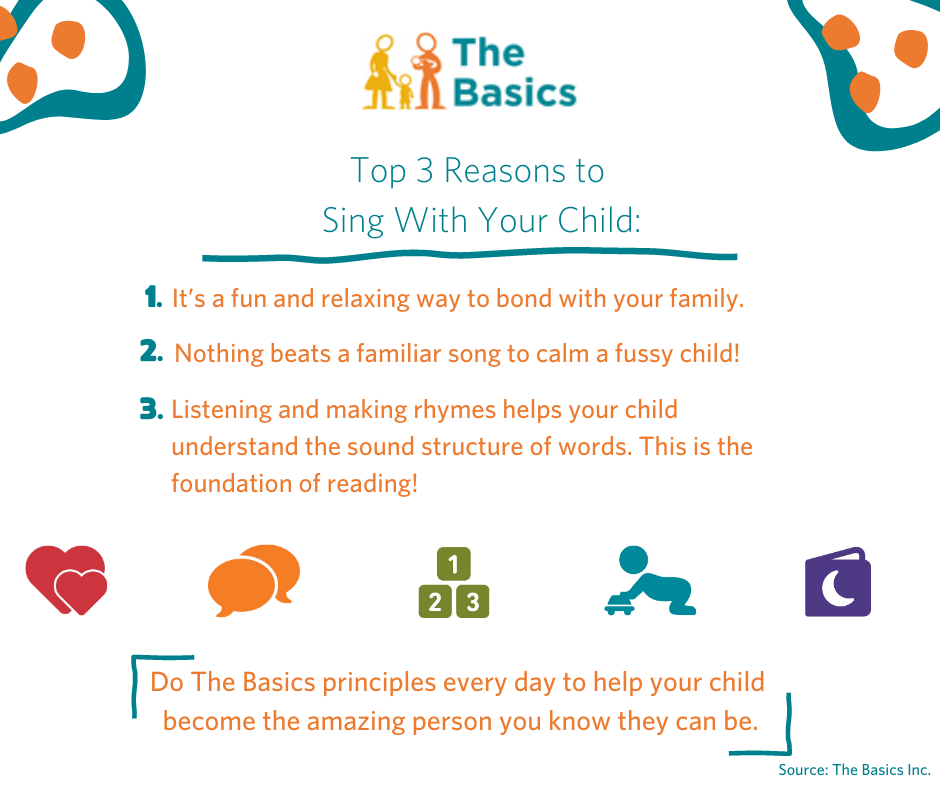
Interestingly, researchers have “found that infant-directed singing attracted infants’ attention longer and more fully than speech (The Science Behind The Basics, 2020).”
With this knowledge in hand, we should all be asking:
Is singing the Jedi mind trick I’ve been missing, in order for plates to be cleared, and toys put away?
Perhaps. The thought is that children pay more attention to singing because of its “emotional expressiveness and repetitive nature.”
It’s worth giving a try, if for no other reason than to add some levity during the stressful times with little ones.
Here are some age-specific suggestions for adding songs to your routine:
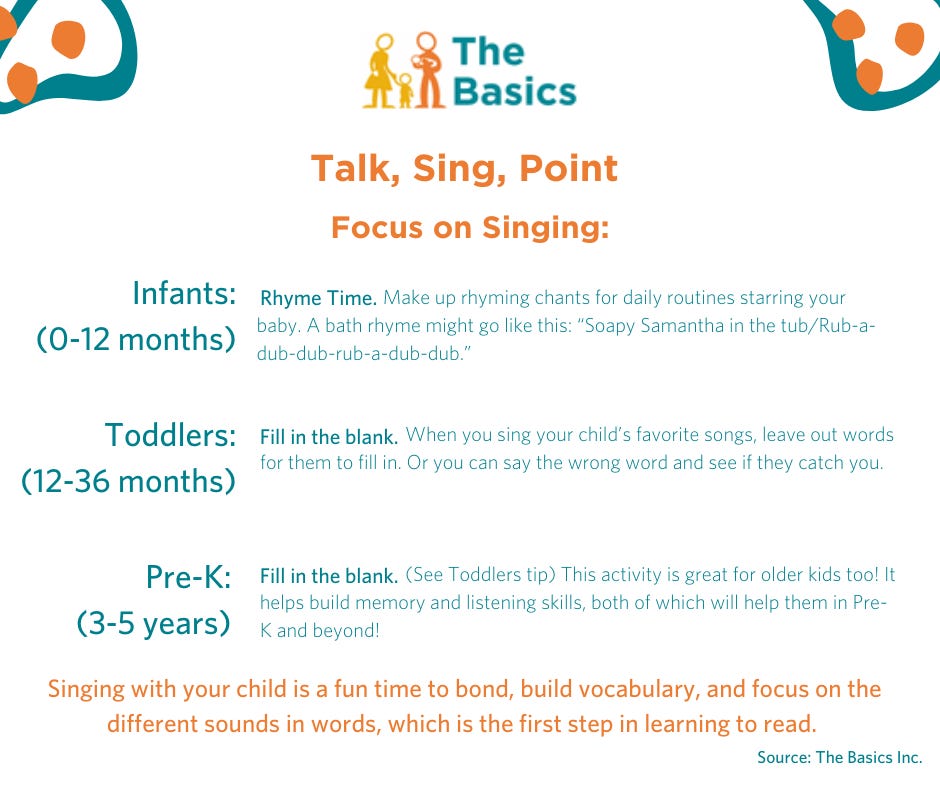
Honor Rhyme Time!
Rhyming: identifying rhyming and non-rhyming words, and producing one or both words in a rhyming set, is the foundation of phonological awareness.
It is a valuable activity to practice until you know your child has mastered it.
Here’s our old friend, Scarborough’s Reading Rope. Phonological awareness is the first skill under Word Recognition.
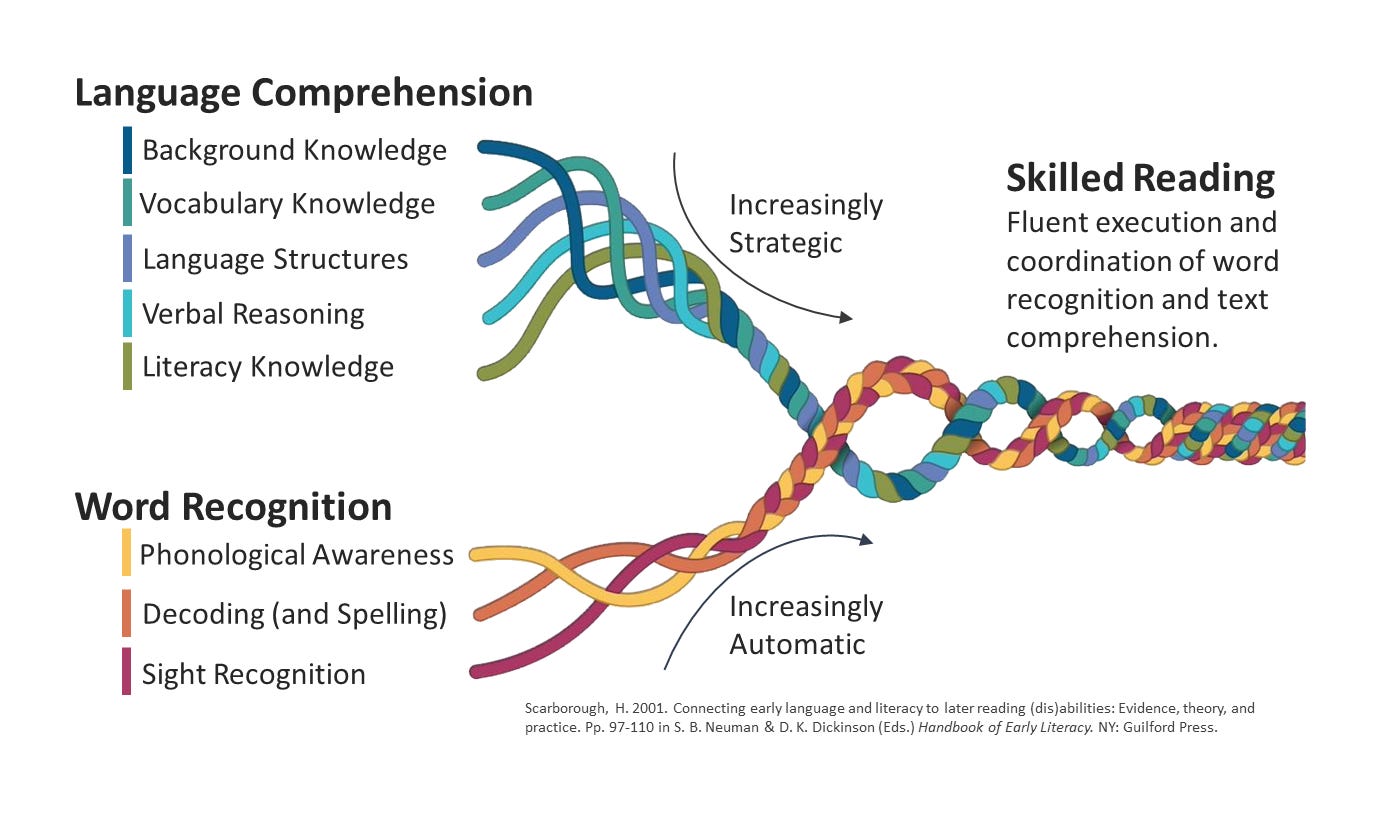
When kids understand that words are made of individual sounds, they have the foundation for learning that those sounds are matched to individual letters- AKA- decoding and spelling.
There is a continuum of skills within phonological awareness, as shown below. Rhyming is considered the least complex, followed by sentence segmentation.
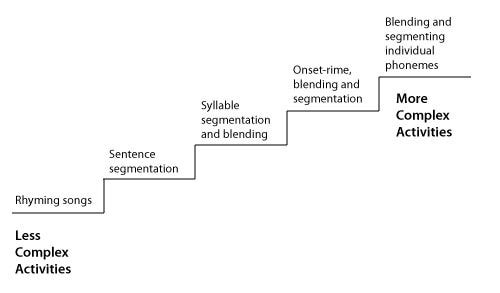
Sidenote for sentence segmentation!
Practicing sentence segmentation with your 3-5-year-old is an easy and fun pre-reading activity. Grab a few crayons, Cheerios, rocks, whatever! Start with one or two words and go from there.
Say a sentence, “Chloe runs.” Move one Cheerio as you repeat each word. Count how many Cheerios you moved. Say, “Two words.” Repeat the sentence again and hold up a finger for each word or repeat with the object.
Two birds with one stone.
This activity is also building the numeracy skill of ‘one-to-one correspondence:’ that numbers match specific quantities of objects. This is great, but some kids will need more practice than others, so keep helping your child until they are accurate.
This should go without saying, but follow your intuition. Also, remember attention span and ‘playing the long game.’ Just doing two or three examples a week would be awesome.
Conversational Turns
This video highlights the impact that ‘serve and return’ conversations have on the socio-emotional wellness of 30-month-old toddlers. It’s from the LENA website- they are the company that created the ‘talk pedometer’ used in many studies on conversational turns.
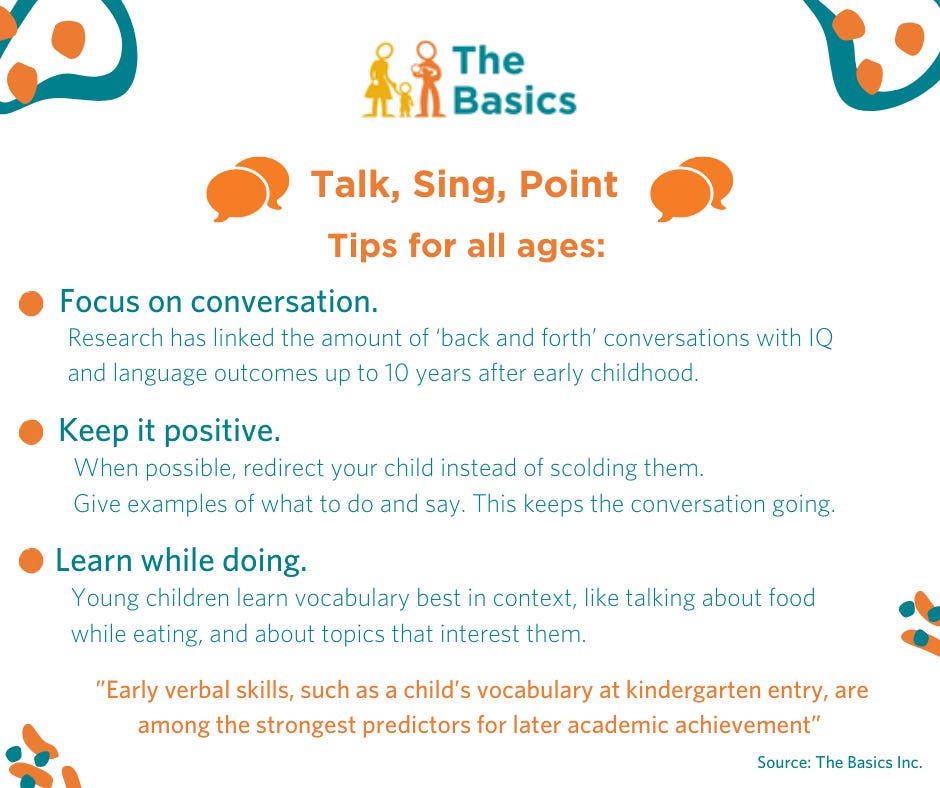
Reposting these tips from last week!
Keep fighting the good fight!
Next week is Talk, Sing, and Point Volume 3: Point.
I love your blog!